Use code ISHLIV to get 10% OFF

Can a Mandir Face South? Vastu Myths Explained
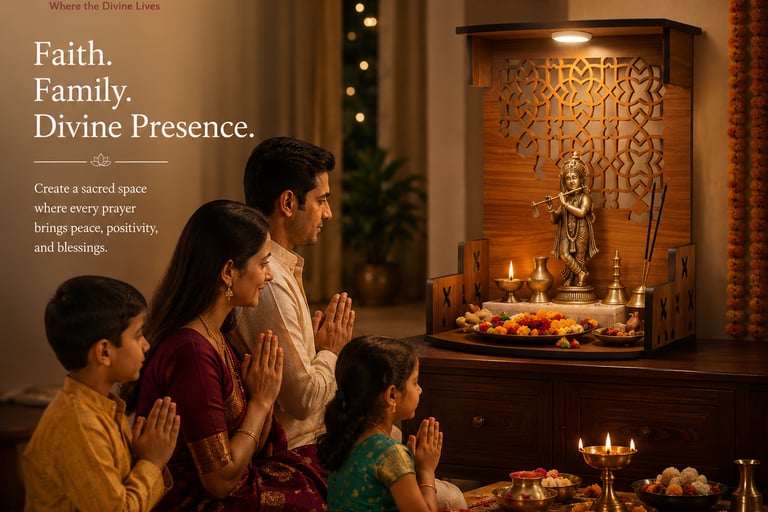

One of the most common questions homeowners ask when setting up a prayer space is:
"Can a mandir face south?"
If you've searched online, you've probably found conflicting answers. Some sources claim that a south-facing mandir should never be used, while others suggest the answer depends on the home's layout and the interpretation of Vastu principles.
For families living in Canada and the USA, this question is especially common. Modern homes are rarely designed around traditional Vastu guidelines, and existing floor plans often limit where a mandir can realistically be placed.
The purpose of this guide isn't to create fear or strict rules. Instead, we'll explain the traditional beliefs, separate common myths from practical interpretation, and help you make an informed decision that respects both your home and your daily worship.
If you're looking for guidance on which directions are traditionally preferred, read our guide on Best Direction for Home Temple According to Vastu.
Quick Answer
Yes, a mandir can face south in certain situations.
While traditional Vastu generally recommends North-East, East, and North as the preferred directions, there is no universal agreement that every south-facing mandir is automatically incorrect.
Many modern Vastu practitioners encourage homeowners to create a peaceful and respectful prayer space that works naturally within their home's existing layout.
For most families, a clean, thoughtfully maintained mandir that supports regular worship is far more important than forcing an impractical arrangement.
Why This Question Creates So Much Confusion
The South direction is one of the most debated topics in Vastu.
Part of the confusion comes from simplified advice shared on social media, videos, and online forums, where complex traditional guidance is often reduced to a single statement such as "Never keep a mandir facing south."
In reality, Vastu is much more nuanced.
Different traditions and practitioners may interpret the same situation differently, particularly when advising families living in modern North American homes rather than houses originally designed around Vastu principles.
Understanding this context makes it much easier to separate traditional recommendations from common misconceptions.
In This Guide
Why the South direction is often questioned
Traditional Vastu beliefs
Common myths about south-facing mandirs
Different Vastu interpretations
What matters more than direction
When a south-facing mandir may be unavoidable
Practical guidance for modern homes
Why Is the South Direction So Commonly Questioned?
Few Vastu topics create as much discussion as the South direction.
Many homeowners have heard statements such as:
"A mandir should never face south."
"A south-facing mandir brings bad luck."
"Prayers won't be effective."
"You must move your mandir immediately."
These claims are often repeated without explaining where they come from or whether they apply to every home.
Traditional Vastu is based on guiding principles rather than fear-based rules. Like many traditional systems, its recommendations are intended to help create harmony—not anxiety.
Understanding the reasoning behind these recommendations is much more valuable than simply accepting absolute statements.
Traditional Vastu Beliefs About the South Direction
Traditional Vastu generally recommends North-East, East, and North as the preferred directions for a home temple.
These directions have long been associated with qualities such as:
Spiritual focus
Peace and tranquility
Morning light
Positive energy
Reflection and prayer
Because these directions are traditionally preferred, many people assume every other direction must automatically be wrong.
That isn't necessarily how Vastu is intended to be understood.
These recommendations establish an order of preference whenever homeowners have the flexibility to choose. They do not always account for the realities of modern homes where room layouts are already fixed.
For many families today, thoughtful adaptation is often more practical than trying to redesign an entire home.
Myth #1: "A South-Facing Mandir Is Always Wrong"
This is probably the most common misconception surrounding Vastu.
Many online articles present this as an absolute rule, but traditional Vastu discussions are generally more balanced than that.
Rather than evaluating only the direction, many practitioners also consider:
The home's existing layout
Practical limitations
Daily worship habits
Respect for the prayer space
Overall harmony within the home
This approach is particularly relevant in Canada and the USA, where homeowners usually work with completed floor plans instead of designing homes around Vastu principles.
Simply having a south-facing mandir does not automatically make the prayer space unsuitable.
Quick Note: Placement vs. Facing Direction
One point that often causes confusion is the difference between where a mandir is placed and which direction prayers are offered.
For example, a mandir positioned along a south wall doesn't always mean worship takes place facing south. Depending on the mandir's design and how it is positioned, the worshipper and the deities may face different directions.
This guide focuses specifically on the common question of whether a south-facing arrangement is acceptable, while our other Vastu guides explore placement and preferred directions in greater detail.
Myth #2: "A South-Facing Mandir Brings Bad Luck"
Another common belief is that a south-facing mandir inevitably attracts negative energy or misfortune.
This idea has become widespread through simplified online advice, but it is often presented without historical context or explanation.
Most traditional Vastu guidance focuses on creating balance, peace, and harmony within the home.
Turning these recommendations into a source of fear moves away from their original purpose.
For many families, the true value of a home mandir comes from creating a dedicated place for prayer, gratitude, and spiritual reflection—not from worrying about a single direction in isolation.
Different Vastu Practitioners May Offer Different Advice
One reason homeowners often receive conflicting answers is that Vastu is interpreted through multiple traditions and teaching methods.
Some practitioners follow highly traditional recommendations whenever possible.
Others take a more practical approach by considering:
Modern home architecture
Existing floor plans
Family lifestyle
Structural limitations
Everyday usability
This explains why two experienced practitioners may offer different recommendations for exactly the same home.
Rather than assuming only one opinion is correct, it's helpful to understand that Vastu often involves thoughtful interpretation alongside traditional guidance.
What Matters More Than Direction?
Although direction receives most of the attention, many families overlook the qualities that truly make a prayer space meaningful.
A well-planned mandir should be:
Clean and well maintained
Respectfully arranged
Easy for the family to access
Free from unnecessary clutter
Used regularly for prayer and reflection
For many modern households, these qualities have a greater impact on daily worship than achieving a theoretically perfect direction.
Creating a peaceful spiritual routine often matters more than striving for absolute directional perfection.
What to Do If a South-Facing Mandir Cannot Be Avoided
For many families, the available location for a home mandir is determined by the home's existing layout rather than personal preference.
Open-concept living spaces, fixed walls, large windows, fireplaces, and structural design often limit where a mandir can realistically be placed. In these situations, a south-facing arrangement may simply be the most practical solution.
If that's the case, there is no need to feel anxious.
Many Vastu practitioners encourage homeowners to make thoughtful choices within the limitations of their space instead of forcing costly renovations or placing the mandir in a location that disrupts everyday life.
The goal is to create a prayer space that feels peaceful, respectful, and easy to use consistently.
A Practical Interpretation for Modern Homes
Traditional Vastu developed during a time when homes were often planned from the ground up with directional principles in mind.
Today's homes are different.
Whether you live in a detached house, townhouse, apartment, or condominium, your floor plan is usually fixed long before you choose a mandir.
Because of this, many families approach Vastu with a balance of tradition and practicality.
Instead of asking:
"Is my mandir perfectly positioned?"
A more helpful question is:
"Have I created a space that encourages daily prayer, peace, and spiritual reflection?"
If your mandir is:
Clean and well maintained
Used regularly
Integrated respectfully into your home
Comfortable for everyday worship
then it continues to fulfill its most important purpose.
Myth vs. Fact
Many assumptions about south-facing mandirs are repeated without context. This table summarizes the difference between common myths and a more balanced understanding.
Common Mistakes to Avoid
When researching South Facing Mandir Vastu, it's easy to encounter advice that creates unnecessary worry.
Try to avoid these common mistakes:
Treating every online opinion as an absolute rule.
Assuming there is only one correct interpretation of Vastu.
Making expensive renovations solely because of one directional concern.
Letting fear replace thoughtful decision-making.
Focusing only on direction while overlooking the overall quality of the prayer space.
A balanced understanding helps you make practical decisions that suit both your home and your spiritual routine.
Final Thoughts
So, can a mandir face south?
In many modern homes, yes—it can.
Traditional Vastu generally recommends North-East, East, and North whenever those directions are practical. However, modern homes don't always offer ideal layouts, and many practitioners recognize the importance of adapting respectfully to existing spaces.
Rather than viewing a south-facing mandir as automatically incorrect, focus on creating a prayer space that is peaceful, well maintained, and used with sincerity.
Ultimately, the purpose of a home mandir is to support daily worship and spiritual connection—not to create unnecessary anxiety over a single aspect of your home's layout.
If you're deciding which direction is traditionally preferred, continue with our guide on Best Direction for Home Temple According to Vastu. If you're looking for practical advice on where to position a mandir within your home, explore our guide on Vastu Tips for Mandir Placement in Modern Homes.
Frequently Asked Questions
Can a mandir face south according to Vastu?
Yes. While traditional Vastu generally recommends North-East, East, and North as preferred directions, many practitioners recognize that modern homes sometimes require practical alternatives, including a south-facing arrangement.
Is a south-facing mandir considered bad luck?
This is a common belief, but there is no universal agreement among Vastu practitioners. Most traditional guidance focuses on creating a respectful and peaceful prayer space rather than promoting fear.
Should I move my mandir if it faces south?
Not necessarily. Consider your home's layout, your daily worship routine, and whether the existing space supports regular prayer before making major changes.
Why do different Vastu experts give different advice?
Vastu includes multiple traditions and schools of thought. As a result, practitioners may interpret traditional principles differently when advising families living in modern homes.
What matters most when setting up a home mandir?
Beyond direction, maintaining a clean, peaceful, and regularly used prayer space is widely considered an important part of creating a meaningful place for worship.
Continue Reading
Continue exploring our Home Temple Vastu Guide for practical direction, placement, and planning advice.
Need Help Choosing?
Find a home mandir that fits your layout and complements your daily prayer routine.
ISHLIV
Bringing divine presence into modern North American homes through meticulously crafted, easily assembled sacred spaces.
Support
Contact
📧 contact@ishavasyamliving.com
🇨🇦 +1-905-226-6346
🇺🇸 +1-641-991-8169
Secure Payments
Available across USA & Canada
📍Ships from North American warehouses
© 2026 ISHLIV. All rights reserved.