Use code ISHLIV to get 10% OFF

Living Room Mandir Design and Placement
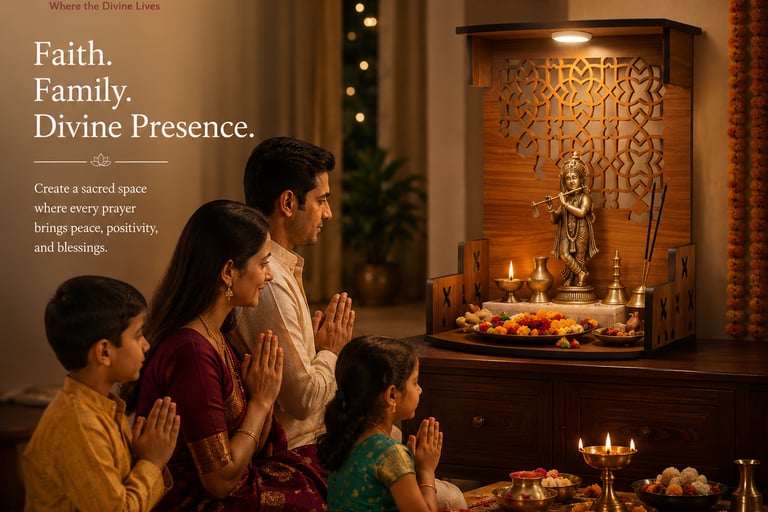

The living room is one of the most common places to create a home mandir. It is central, accessible, and often the most beautifully styled area of the home.
But placing a mandir in the living room needs thoughtful planning. The goal is not only to find an empty wall. The goal is to create a prayer space that feels peaceful, respectful, and visually balanced with the rest of the room.
A good living room mandir should feel intentional. It should not compete with the TV, get mixed with clutter, or feel like an afterthought. With the right placement, furniture balance, lighting, and styling, your mandir can become one of the most meaningful parts of your living space.
Unlike general home temple ideas, this guide focuses specifically on living room mandir design and placement — where to place it, how to style it with furniture, how to manage visibility, and how to choose between modern MDF and traditional oxidized mandirs for your living room.
In This Guide, You’ll Explore
Where to place a mandir in the living room
How to keep the mandir away from TV clutter
How to make the mandir a peaceful focal point
Mandir placement with a console or sideboard
Open-concept living room zoning
Guest visibility and privacy considerations
How to blend the mandir with sofas, TV units, and wall decor
MDF mandirs for modern living rooms
Oxidized mandirs as traditional living room focal points
1. Choose a Calm Living Room Wall
The best living room mandir placement usually starts with a clean and calm wall.
A mandir should not feel squeezed between unrelated furniture or placed in a visually noisy area. It should have enough surrounding space to feel respectful and easy to approach.
Good living room wall choices include:
A clean side wall
A wall beside a console or sideboard
A quiet area away from the main TV glare
A wall with enough visual breathing space
A section that does not block walking paths
A wall that feels easy to keep clean
Avoid placing the mandir where it becomes part of general household clutter. The wall should help the mandir feel calm and intentional.
Image placement idea: MDF mandir placed against a clean living room side wall with sofa visible nearby.
Suggested image ALT text: Living room mandir placed on a clean side wall.
2. Keep the Mandir Away From TV Clutter
One of the biggest challenges in living room mandir placement is the TV area.
Many living rooms revolve around the TV unit, media console, speakers, remotes, wires, gaming devices, and everyday accessories. If the mandir is placed too close to this area, the sacred space can feel visually mixed with entertainment clutter.
Try to avoid placing the mandir:
Directly inside a crowded TV unit
Beside exposed wires or electronics
Near gaming consoles or speakers
On a surface used for remotes, keys, or mail
In a spot where the TV visually dominates the mandir
If the mandir must be near the TV area, create separation with clean spacing, a dedicated console section, warm lighting, or simple wall decor.
The mandir should feel like its own prayer zone, not an extension of the entertainment area.
3. Make the Mandir a Living Room Focal Point
A mandir can become a beautiful focal point in the living room when styled with intention.
This does not mean the mandir has to be large or dramatic. It means the mandir should have visual importance and emotional presence within the room.
To create a focal point:
Give the mandir a clean backdrop
Use warm lighting
Keep surrounding decor minimal
Avoid placing unrelated items nearby
Choose a mandir finish that complements the room
Keep the setup symmetrical where possible
Let the mandir area feel visually calm
A living room mandir should naturally draw attention without making the room feel crowded.
Image placement idea: Mandir styled as a focal point in a living room with balanced decor and warm lighting.
Suggested image ALT text: Living room mandir styled as a peaceful focal point.
4. Mandir With Sideboard or Console
A sideboard or console can make a living room mandir feel more complete.
This setup works especially well when the mandir is compact. Exploring small mandir designs for apartments and condos on a console can provide a defined prayer area without needing a large floor-standing temple.
The console gives the mandir a visual base and can provide space for simple pooja items, books, flowers, or festival decoration.
A mandir with a console works best when:
The console is strong and stable
The mandir is proportionate to the furniture
The surface is kept clean
The area is not used for keys, mail, or bags
The console finish complements the mandir
The arrangement feels like one complete prayer zone
This approach is especially useful if you want the mandir to blend naturally with living room furniture while still feeling sacred.
Image placement idea: Compact MDF mandir styled on or above a clean sideboard in a living room.
Suggested image ALT text: Living room mandir with sideboard and warm lighting.
5. Open-Concept Living Room Zoning
Open-concept homes often combine the living room, dining area, and kitchen into one shared space. This can make mandir placement more challenging because the prayer area is visible from multiple angles.
The goal is to create a gentle visual zone without adding walls or making the space feel divided.
In open-concept living rooms, consider:
A clean wall section away from kitchen activity
A console-backed mandir area
Warm lighting to define the prayer zone
A small rug or prayer mat if appropriate
Matching wood tones with nearby furniture
Keeping surrounding surfaces uncluttered
A living room mandir in an open layout should feel connected to the home but still distinct from everyday activity.
For homes with an unused corner in an open layout, a dedicated corner mandir layout may also help define the sacred area without taking over the room.
6. Balance Guest Visibility and Family Privacy
A living room mandir is often visible to guests, visitors, and extended family. That can be beautiful, but it also means placement should feel respectful and comfortable.
Some families prefer the mandir to be openly visible as a devotional focal point. Others prefer a slightly quieter placement where daily prayer feels more private.
Before choosing the location, consider:
Will guests see the mandir immediately when entering?
Does the placement feel respectful?
Is the area too exposed or too hidden?
Can family members pray comfortably?
Does the mandir feel protected from casual clutter?
Is the space easy to maintain before guests arrive?
There is no single right answer. The best living room mandir placement should match how your family uses the space.
7. Blending the Mandir With Sofa and Furniture Layout
A living room mandir should work with the furniture, not fight against it.
Look at the position of your sofa, accent chairs, coffee table, console, and TV unit before deciding where the mandir belongs. The mandir should not interrupt the room’s natural flow or make the furniture layout feel awkward.
Good furniture-blending ideas include:
Place the mandir on a side wall visible from the sofa
Use a console that matches nearby furniture tones
Keep enough walking space around the prayer area
Avoid placing the mandir behind large furniture
Use warm lighting that matches the room mood
Keep decor around the mandir simpler than the rest of the room
A mandir that complements the sofa area can make the entire living room feel warmer and more meaningful.
8. Blending the Mandir With TV Unit and Wall Decor
If your living room already has a TV unit or feature wall, the mandir needs careful visual balance.
The mandir should not look like another decorative shelf inside a busy media wall. It should have its own respectful identity.
If the mandir is near a TV unit:
Keep some separation between the mandir and electronics
Hide or organize visible wires
Avoid placing speakers directly beside the mandir
Do not mix prayer items with remotes or media devices
Use warm lighting to distinguish the mandir area
Keep devotional decor simple and focused
If your wall has artwork, frames, or shelves, keep the area around the mandir lighter. Too many items on the same wall can reduce the calm feeling of the prayer space.
9. MDF Mandirs for Modern Living Rooms
A wood-finish MDF mandir works well in modern living rooms because it can feel warm, clean, and visually light.
This is useful when the living room already has sofas, tables, TV units, rugs, and wall decor. A compact MDF mandir can create a peaceful prayer space without making the room feel heavy.
MDF mandirs work especially well when you want:
A clean modern look
Open daily access
Warm wood-finish styling
Precision-cut devotional details
Compact proportions
Battery-operated warm white LED lighting
A mandir that blends with living room furniture
Battery-operated lighting is especially useful in the living room because it avoids visible wires and keeps the mandir area clean, even when placed away from an outlet.
Image placement idea: Wood-finish MDF mandir styled beside neutral living room furniture with warm lighting.
Suggested image ALT text: MDF mandir for modern living room design.
10. Oxidized Mandirs as Traditional Living Room Focal Points
An oxidized mandir can create a stronger traditional presence in the living room.
This style is best when you want the mandir to feel like a devotional focal point rather than a quiet furniture-blended element. Oxidized mandirs often include decorative doors, silver and copper tones, detailed artwork, and a more temple-inspired appearance.
An oxidized mandir works best in a living room when:
There is enough floor space
The doors can open comfortably
The mandir has visual breathing room
The surrounding furniture is not too crowded
The placement allows the detailing to be appreciated
The area feels formal and respectful
Because oxidized mandirs are generally heavier and more ornate, they should not be squeezed between furniture or placed where doors cannot open freely.
In the right living room setting, an oxidized mandir can become a beautiful traditional focal point.
Image placement idea: Oxidized mandir placed against a clean living room wall with enough space around the doors.
Suggested image ALT text: Oxidized mandir as a traditional living room focal point.
11. Simple Living Room Mandir Decor
Living room mandir decor should feel peaceful, not excessive.
Because the mandir is part of a shared family area, simple styling usually works best for daily use. Festival decoration can be added temporarily for special occasions.
Good living room mandir decor includes:
One clean prayer cloth
One or two idols or framed devotional images
A small flower bowl
One bell
A small tray for daily pooja items
Battery-operated warm white LED light
Electric LED diya for daily use
Simple flowers or festive decoration during special occasions
Avoid turning the mandir area into a display shelf. The decor should support prayer, not distract from it.
12. Living Room Mandir Placement Checklist
Before finalizing your mandir placement, review the living room as a whole.
Use this checklist:
Is the mandir away from shoes and clutter?
Is it too close to the TV or electronics?
Does it have enough visual breathing space?
Can family members access it comfortably?
Does the mandir match the furniture style?
Is the wall or surface clean and stable?
Are wires hidden or avoided?
Can guests see it respectfully?
Does it feel peaceful during daily use?
Is the setup easy to maintain?
A living room mandir should feel integrated, not forced.
Best Living Room Mandir Setup by Home Style
Use this quick guide when choosing the right living room mandir style.
The right living room mandir setup depends on how your family uses the room every day.
Final Thoughts
A living room mandir can bring peace, beauty, and devotion into the heart of your home.
The best placement is not simply the most empty spot. It is the location that feels respectful, practical, visually balanced, and easy to use every day.
A modern MDF mandir can blend beautifully with sofas, consoles, wall decor, and open-concept layouts. A traditional oxidized mandir can create a stronger devotional focal point when the living room has enough space and visual balance.
Whether your mandir is compact and modern or traditional and ornate, the living room setup should feel calm, intentional, and connected to your family’s daily prayer routine.
For broader inspiration, explore our main Home Temple Ideas guide.
Frequently Asked Questions
Can I place a mandir in the living room?
Yes, the living room is one of the most common places for a home mandir. Choose a clean, respectful area away from shoes, clutter, bathrooms, and heavy electronics.
Where should I place a mandir in the living room?
A clean side wall, console area, or calm section away from the TV is usually best. The mandir should have enough breathing space and feel easy to access for daily prayer.
Can I place a mandir near the TV?
It is better to avoid placing the mandir directly inside a crowded TV unit or beside exposed wires and electronics. If it must be near the TV, create clear visual separation.
What type of mandir is best for a modern living room?
A wood-finish MDF mandir is often a good choice for modern living rooms because it feels warm, clean, compact, and easy to blend with furniture.
Is an oxidized mandir good for a living room?
Yes, an oxidized mandir can work beautifully in a living room if there is enough floor space, door clearance, and visual breathing room. It is best as a traditional focal point.
How do I make my living room mandir look elegant?
Keep the area clean, use warm lighting, avoid clutter, match the mandir finish with nearby furniture, and use only a few meaningful decor items for daily use.
Continue Reading
Looking for more home temple ideas for apartments, condos, living rooms, wall-mounted mandirs, lighting, and modern spaces?
Need Help Choosing?
Not sure which home mandir is right for your space?
Browse our collection of modern MDF and traditional oxidized mandirs designed for homes across Canada and the USA.
ISHLIV
Bringing divine presence into modern North American homes through meticulously crafted, easily assembled sacred spaces.
Support
Contact
📧 contact@ishavasyamliving.com
🇨🇦 +1-905-226-6346
🇺🇸 +1-641-991-8169
Secure Payments
Available across USA & Canada
📍Ships from North American warehouses
© 2026 ISHLIV. All rights reserved.