Use code ISHLIV to get 10% OFF

Corner Mandir Ideas for Small Spaces
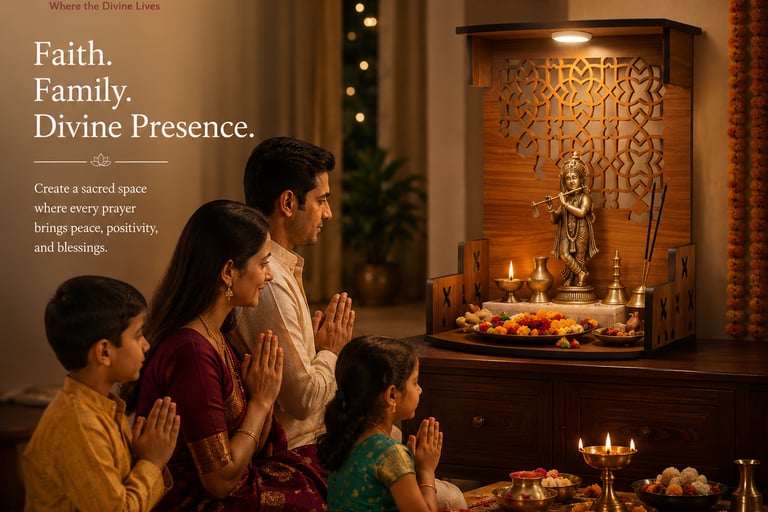

An unused corner can become one of the most meaningful areas of your home.
Many homes have corners that are too small for furniture, too visible for storage, or too awkward to decorate properly. With the right mandir design, that unused space can become a peaceful prayer area for daily worship.
Corner mandir ideas are especially useful when you want a dedicated home temple without using a full wall, large floor area, or separate pooja room. The goal is simple: turn a neglected corner into a space that feels intentional, sacred, and beautiful.
Unlike general home temple ideas, this guide focuses only on corner-based mandir planning — true corner mandirs, rectangular mandirs near corner walls, hallway corners, open-concept corner zoning, and corner-friendly styling.
In This Guide, You’ll Explore
True corner mandir design ideas
Corner-shaped MDF mandirs
Rectangular mandirs near corner walls
Hallway and passage corner mandirs
Open-concept corner zoning
Corner lighting ideas
Corner-specific decor tips
Why oxidized mandirs are usually not ideal for tight corners
1. Why Corners Work Well for Mandir Spaces
Corners are often underused in modern homes. They may be too small for a cabinet, too narrow for a desk, or too awkward for regular decor. But for a mandir, a quiet corner can be ideal.
A corner mandir works well because it:
Uses space that may otherwise stay empty
Creates a dedicated prayer zone
Keeps the mandir slightly separate from daily activity
Helps define a sacred area without needing a full room
Works well in compact and open-concept homes
Feels intentional when styled properly
The best corner mandir setup should not look squeezed in. It should look like the corner was chosen with purpose.
Image placement idea: Corner-specific MDF mandir placed in an unused room corner with simple decor.
Suggested image ALT text: Corner mandir design using an unused space in a modern home.
2. True Corner Mandir Design
A true corner mandir is designed to fit into a corner, rather than simply being placed near one.
This is the most important difference. A regular flat-back mandir can work near a corner wall, but a corner-shaped mandir is made specifically to use angled or corner space more efficiently.
A true corner mandir design usually works best when you want:
A mandir that fits naturally into a room corner
A compact prayer area with a planned look
Better use of underused corner space
A more built-in appearance
A dedicated devotional zone without using a full wall
This type of setup is especially helpful in homes where every wall is already being used for furniture, windows, doors, or storage.
A corner-shaped MDF mandir can make the prayer space feel more intentional because the design follows the shape of the room instead of fighting against it.
3. Corner-Shaped MDF Mandir for Compact Homes
A corner-shaped MDF mandir is one of the most practical options for small-space corner planning.
MDF allows clean shapes, precision-cut decorative panels, wood-finish surfaces, and compact proportions. When designed specifically for a corner, it can create a warm and devotional space without feeling too heavy.
A corner-shaped MDF mandir works well for:
Unused living room corners
Compact family room corners
Townhouse layouts
Condo prayer nooks
Open-concept spaces
Homes without a separate pooja room
Useful features to look for include:
Corner-friendly shape
Open daily-access design
Warm battery-operated LED lighting
Small shelf for prayer items
Precision-cut decorative details
Stable base or surface placement
Balanced proportions
Battery-operated warm white LED lighting is especially useful in corner mandirs because corners often do not have nearby outlets. It keeps the setup clean, avoids visible wires, and gives the prayer area a soft devotional glow.
Image placement idea: Corner-shaped MDF mandir with warm lighting, styled with one idol, one book, and simple flowers.
Suggested image ALT text: Corner-shaped MDF mandir with warm LED lighting.
4. Rectangular Mandir Near a Corner Wall
Not every corner setup requires a true corner-shaped mandir.
A regular rectangular mandir can also work beautifully when placed near a corner wall, especially if the wall area has enough width and depth. This setup is useful when you want corner placement but prefer a standard flat-back mandir design.
This pairs well with clean small mandir designs for apartments that focus on a minimized footprint, simple placement, and practical daily use.
A rectangular mandir near a corner works best when:
The mandir sits against one clean wall
The side wall helps define the prayer area
There is enough space around the mandir
The setup does not block movement
The mandir feels placed, not squeezed
This type of layout is good for side walls, hallway ends, dining-area edges, or small living-room zones where a true corner-shaped unit is not necessary.
The key is to leave enough visual breathing space. A rectangular mandir should not be forced tightly into a corner if it makes the area feel crowded.
Image placement idea: Regular rectangular MDF mandir placed near a corner wall with clean space around it.
Suggested image ALT text: Rectangular MDF mandir placed near a corner wall.
5. Hallway or Passage Corner Mandir
A hallway or passage corner can become a beautiful mandir space if the area is clean, safe, and not too narrow.
Many homes have small transition spaces that are not useful for furniture but can work well for a compact prayer area. A hallway mandir should feel calm and respectful, not like an afterthought.
This setup works best when:
The passage is wide enough
The mandir does not block movement
The area is not near shoes or bathrooms
The wall behind the mandir is clean
Lighting is soft and warm
Daily prayer items stay neatly arranged
For hallway or passage corners, a regular rectangular MDF mandir is often better than a corner-shaped mandir. Hallways usually have one clear wall rather than a deep corner, so a flat-back design can sit more naturally against the wall.
Avoid using a hallway mandir if the space is dark, cluttered, or too busy. A sacred space should still feel peaceful.
Image placement idea: Regular rectangular MDF mandir in a hallway niche or passage corner with warm battery-operated LED lighting.
Suggested image ALT text: Rectangular MDF mandir in a hallway prayer corner.
6. Open-Concept Corner Zoning
Open-concept homes often need visual zones. A corner mandir can help create a sacred zone without adding walls or dividers.
In homes where the living room, dining area, and kitchen connect, the mandir should feel defined but not disconnected. A clean corner can act as a quiet prayer area within the larger space.
To make an open-concept corner mandir feel intentional:
Choose a corner away from kitchen clutter
Keep the wall behind the mandir clean
Use warm lighting to define the space
Keep surrounding decor simple
Avoid using the corner for mixed storage
Leave enough room for daily prayer
This is different from general living-room placement. The focus here is on using the corner itself to create a quiet boundary inside an open layout.
A corner-specific MDF mandir works especially well here because the shape helps the prayer area feel naturally defined.
7. Corner Lighting Ideas
Corners can sometimes feel darker than the rest of the room. Good lighting helps the mandir feel warm, visible, and devotional.
For corner mandirs, lighting should be clean and simple. The goal is to brighten the sacred space without adding visible cords or clutter.
Good corner lighting options include:
Battery-operated warm white LED light
Electric LED diya for daily use
Soft spotlight effect inside the mandir
Temporary festive lighting during special occasions
Small nearby lamp, if it does not crowd the space
Battery-operated warm white LED lighting is especially practical because:
Corners may not have outlets nearby
No wires need to run across the wall or floor
The setup stays cleaner
It works well for renters and condos
It creates a soft devotional glow
Warm white lighting usually works better than cool white lighting because it feels calmer and more suitable for prayer.
Image placement idea: Evening corner mandir scene showing warm LED glow and no visible wires.
Suggested image ALT text: Corner mandir with warm battery-operated LED lighting.
8. Corner-Specific Decor Tips
Corner mandir decor should be simple because corners can feel crowded quickly.
The goal is to make the mandir feel sacred without filling every nearby surface. A few meaningful items usually work better than heavy decoration.
Good decor choices include:
One clean prayer cloth
One or two idols or framed devotional images
A small flower bowl
One bell
A small tray for daily pooja items
Electric LED diya for daily use
Simple flowers during festivals
Light festive decoration for special occasions
Avoid placing too many items around the sides of the mandir. Since corners naturally create a tighter visual space, extra decor can make the area feel heavy.
For daily use, keep the corner clean. For festivals, you can add temporary flowers, garlands, or decorative accents, then return to a simpler setup afterward.
9. What About Oxidized Mandirs in Corners?
Oxidized mandirs can be beautiful, but they are usually not the best choice for tight corners.
Most oxidized mandirs have a more traditional, heavier, and more decorative structure. They often look best when they have enough space around them to be appreciated properly.
In a tight corner, ornate details can get hidden. More importantly, physical clearance can become an issue. Many traditional oxidized mandirs include double doors that swing outward. If the mandir is placed tightly into a 90-degree room corner, the door closest to the side wall may not have enough swing radius to open fully. This can obstruct daily access and may even cause the door to scrape the wall.
Oxidized mandirs are generally better for:
Floor placement
Dedicated wall areas
Larger prayer zones
Living room focal points
Traditional interiors
Spaces where doors can open comfortably
For true corner use, a corner-shaped MDF mandir or compact rectangular MDF mandir is usually more practical.
That does not mean oxidized mandirs are not suitable for modern homes. It simply means they usually deserve a more open placement rather than a tight corner.
10. Corner Mandir Placement Checklist
Before choosing a corner for your mandir, check the space carefully.
A good corner should be:
Clean
Calm
Easy to access
Away from shoes
Away from bathrooms
Away from clutter
Not blocking movement
Large enough for the mandir
Suitable for daily prayer
Easy to light and maintain
A corner may look empty, but that does not automatically make it the right place. The best corner is one that feels peaceful and respectful.
11. Simple Safety Note for Corner Mandirs
Corners can place the mandir close to walls, curtains, furniture, or decor, so basic safety matters.
Keep these points in mind:
Keep open flames away from MDF, wood-finish panels, fabric, flowers, and paper
Do not leave flames unattended
Use electric LED diya for daily use
Keep incense holders stable and away from mandir surfaces
Avoid placing the mandir too close to curtains
Make sure the mandir sits securely on its surface or base
For daily worship in compact homes, battery-operated LED lighting and electric LED diyas are often more practical than relying on open flames every day.
12. Best Corner Mandir Setup by Space Type
Use this quick guide when deciding what type of corner mandir fits your home.
Space TypeBest Mandir SetupRecommended DirectionTrue unused room cornerCorner-shaped MDF mandirBest for a planned corner prayer nookSide wall near a cornerRectangular MDF mandirBest when one wall is clean and openHallway or passage cornerRectangular MDF mandirBest for narrow transition spacesOpen-concept layoutCorner-shaped MDF mandirBest for defining a sacred zoneTight corner with limited clearanceCompact MDF mandirBetter than heavy or ornate unitsLarger traditional areaOxidized mandir outside tight cornerBetter as a floor-standing focal point
The best corner mandir setup depends on how the corner actually functions in your home.
Final Thoughts
Corner mandir ideas are about transforming unused space into something meaningful.
A true corner-shaped MDF mandir can make an awkward corner feel intentional, peaceful, and beautifully planned. A rectangular MDF mandir can also work well near a corner wall, hallway niche, or side wall when the layout suits it.
For tight corners, compact MDF designs are usually more practical than oxidized mandirs because they are lighter, cleaner, and easier to fit into limited spaces. Oxidized mandirs are better suited for open floor placement or dedicated wall areas where their traditional detailing and doors can be fully appreciated.
The best corner mandir is not simply the smallest option. It is the one that fits naturally, stays uncluttered, lights beautifully, and supports your family’s daily prayer routine.
For broader inspiration, explore our main Home Temple Ideas guide.
Frequently Asked Questions
Can I place a mandir in a corner?
Yes, a mandir can be placed in a corner if the space is clean, respectful, easy to access, and not near shoes, bathrooms, or clutter.
What type of mandir is best for a corner?
A corner-shaped MDF mandir is usually best for a true corner setup. A compact rectangular MDF mandir can also work well near a corner wall or hallway niche.
Can I use a rectangular mandir in a corner?
Yes. A rectangular mandir can work near a corner wall if there is enough space and the mandir does not feel squeezed. It is best when placed against one clean wall with breathing space around it.
Is an oxidized mandir good for a corner?
Usually, oxidized mandirs are better for open floor placement or dedicated wall areas. Tight corners can hide their details, restrict double-door movement, and make the setup harder to use daily.
What lighting is best for a corner mandir?
Battery-operated warm white LED lighting is ideal because corners may not have nearby outlets. It keeps the setup clean, avoids visible wires, and creates a soft devotional glow.
How do I stop a corner mandir from looking crowded?
Use fewer decor items, keep daily pooja essentials organized, avoid unrelated storage nearby, and choose a mandir that fits the corner naturally.
Continue Reading
Looking for more home temple ideas for apartments, condos, living rooms, wall-mounted mandirs, lighting, and modern spaces?
Need Help Choosing?
Not sure which home mandir is right for your space?
Browse our collection of modern MDF and traditional oxidized mandirs designed for homes across Canada and the USA.
ISHLIV
Bringing divine presence into modern North American homes through meticulously crafted, easily assembled sacred spaces.
Support
Contact
📧 contact@ishavasyamliving.com
🇨🇦 +1-905-226-6346
🇺🇸 +1-641-991-8169
Secure Payments
Available across USA & Canada
📍Ships from North American warehouses
© 2026 ISHLIV. All rights reserved.